



Management practice: The missing piece to sustainability
This series is supported by our partner Aegon Asset Management. It explores how financial institutions are using the SDGs in their financial products across a range of asset classes. The series also includes briefings on the move from ESG to the SDGs and the SDG Impact Standards.
Current approaches taken by the private sector to sustainability are insufficient; they are atomistic, don’t address the root causes and do not take a holistic systems approach. They are failing people and planet as well as business and investment objectives, fuelling scepticism and concerns about impact washing.
Our future depends on the health of the ecosystem in which we all live, work, produce and sell. But we are not on a sustainable path, and we are a long way from achieving the UN Sustainable Development Goals (SDGs).
The situation is worsening. The triple threats of climate change, a global pandemic and continuing conflicts around the world have ravished government balance sheets, diverted aid budgets, and put pressure on our global food, energy, and financial systems. Recent events have shown us just how interconnected economic, social and environmental outcomes are becoming as we approach the boundaries of our planetary and social systems. The crises we face today are impacting those that can least afford it, sending into reverse the sustainable development gains of recent decades. In the words of the IPCC in their latest report on climate change, “risks are now cascading, compounding and aggregating and responses need to be equal in measure”.
We currently measure the wrong things for the wrong reasons, the approach to sustainability is not complete or comprehensive. Financial institutions primarily look at impact the world has on them rather than the impact they have on the world. The private sector has long held the focus on reporting and aligning current activities to the SDGs in a superficial way to report to investors and access financing rather than managing for impact and making decisions that create better outcomes for people and the planet in the future. We need to change course; we need a fundamental and transformational shift on how business gets done, with purpose and impact at its core.
We need to move beyond the current compliance mindset and solely collecting ESG metrics to satisfy external reporting requirements. Instead, we need to work towards intentionality to integrate sustainability, the SDGs and management of impact into internal business and investment decision-making so that sustainability becomes part of our DNA – based on which we report our approach, goals and progress to external stakeholders.
The private sector has a vested interest and a pivotal role to play in creating a more sustainable future and achieving the SDGs by bringing their capacity, creativity and innovation to developing new business models and investment solutions. In fact, many organizations have already made sustainability pledges but are grappling with how to translate their positive intentions and commitments into decisions, actions, and results.
This strong management practice is the missing piece to successful sustainable investing.
How the SDG Impact Standards and the SDG Impact Standards Assurance Framework can help
The SDG Impact Standards have been designed to address these root causes. They are independent, global management standards, guiding the private sector to make decisions that optimize interrelated economic, social, and environmental impacts. As an overarching internal decision-making framework, it can help make sense of existing sustainability principles, frameworks and tools, as well as fill gaps which are undermining progress towards sustainability and achievement of the SDGs. Having this shared language and approach across the whole economic system, the SDG Impact Standards can connect actors making it easier to innovate and solve persistent problems together.
The SDG Impact Standards are based on four key pillars:
The first pillar is strategy. Embedding sustainability and the SDGs in purpose and strategy is important because it drives attention, focus and resources to what matters most and where the organization can have the most significant impact on important outcomes – including by reducing negative outcomes.
The second is management approach. Integrating responsible business practices and managing for impact into organizational systems and decision-making helps organizations generate multiple pathways enabling them to make more informed choices between those options to optimize their contribution towards sustainability and achievement of the SDGs. Operating with responsibility and sustainably at the core should not be an add on to what business gets done, it’s how all business is done.
The third pillar is transparency. Being transparent is an important element of being accountable to Stakeholders – all interested parties including those affected or potentially affected in the future by the organization’s decisions and activities. It also helps Stakeholders make more informed decisions, for instance about whether they want to work with or for the organization, invest in or lend to the organization, or buy or use the organization’s products and services.
The final pillar is governance. Governance is an essential element of embedding responsible business and managing for impact practices into organizational decision-making. The organization’s informal and formal governance mechanisms define expectations of behaviour, how decisions are made and how the organization holds itself accountable for its decisions and actions in accordance with its values, principles and policies.
To help drive adoption and understanding of the SDG Impact Standards, education and training courses are available. Further, the forthcoming SDG Impact Standards Assurance Framework will enable organizations to get an independent assessment of their progress towards implementing the SDG Impact Standards. Those who meet the minimum evidence requirements will be eligible to apply for the SDG Impact Seal which sets the gold standard for impact management practice, strengthening market credibility and trust in the sustainability claims made by organizations.
Implementing the SDG Impact Standards is good for people, planet, business and investment. They recognize that increasingly, how organizations impact the world around them will determine how the world in turn, impacts them. That placing sustainability, the SDGs and managing for impact at the heart of organizational purpose and management decision making not only has potential to deliver positive outcomes for people and planet, but the business and investment portfolio resilience, sustainability and profitability needed to continue to deliver value, for shareholders, investors and society, for the long-term as well.
The SDG Impact Standards sit nicely beside SDG Financial Products, developed by the Global Ethical Finance Initiative (GEFI), showcasing financial products that incorporate the SDG framework.
Fabienne Michaux is the Director of SDG Impact, a global initiative of the UNDP and part of UNDP’s Sustainable Finance Hub, joining in 2019. Fabienne is the lead developer of the SDG Impact Standards, the first and only independent management standards in the market that places sustainability, the SDGs and managing for impact at the core of operations. She is the co-chair of the Australian Advisory Board on Impact Investing and recently participated as a Working Group Member of the G7 Impact Taskforce and co-chaired the Australian Sustainable Finance Initiative’s working group on making better decisions. She previously enjoyed a 30-year executive career, including 22 years with S&P Global where in her final role she was the Australian Country Head and Head of Developed Markets Asia-Pacific in the credit ratings division. She is also an experienced non-executive director who holds, and has held, numerous board positions in the housing, education, financial and arts sectors.
SDG Financial Products was launched at COP26 by GEFI and showcases commercial financial products that are aligned to the SDG in order to share learnings and grow the ecosystem of SDG aligned financial products across asset classes.
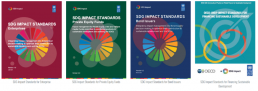
The SDG Impact Standards provide guidance on developing an appropriate strategy, management approach, transparency and governance to assist businesses and investors in contributing positively to sustainable development and achieving the SDGs. The Impact Standards also provide a decision-making framework to make sense of existing relevant principles, frameworks and tools.

Management practice: The missing piece to sustainability
This series is supported by our partner Aegon Asset Management. It explores how financial institutions are using the SDGs in their financial products across a range of asset classes. The series also includes briefings on the move from ESG to the SDGs and the SDG Impact Standards.
Current approaches taken by the private sector to sustainability are insufficient; they are atomistic, don’t address the root causes and do not take a holistic systems approach. They are failing people and planet as well as business and investment objectives, fuelling scepticism and concerns about impact washing.
Our future depends on the health of the ecosystem in which we all live, work, produce and sell. But we are not on a sustainable path, and we are a long way from achieving the UN Sustainable Development Goals (SDGs).
Thank you for reading the excerpt of this article.
To gain access to the full text, sign up below.
Global Ethical Finance Initiative needs the contact information you provide to allow us to contact you about our events and services. You may unsubscribe from these communications at any time. For information on how to unsubscribe, as well as our privacy practices and commitment to protecting your privacy, please review our Privacy Policy.
SDG Financial Products was launched at COP26 by GEFI and showcases commercial financial products that are aligned to the SDG in order to share learnings and grow the ecosystem of SDG aligned financial products across asset classes.
The SDG Impact Standards provide guidance on developing an appropriate strategy, management approach, transparency and governance to assist businesses and investors in contributing positively to sustainable development and achieving the SDGs. The Impact Standards also provide a decision-making framework to make sense of existing relevant principles, frameworks and tools.
Fixed Income: From use of proceeds to delivering on sustainability
This series is supported by our partner Aegon Asset Management. It explores how financial institutions are using the SDGs in their financial products across a range of asset classes. The series also includes briefings on the move from ESG to the SDGs and the SDG Impact Standards.
Several fixed income products explicitly aligned to the United Nation’s Sustainable Development Goals (SDGs), the world’s official developmental agenda, are now available including sovereign and corporate bonds and fixed income funds.
Mexico was the first to issue a sovereign SDG bond. In 2020, it raised $890 million for investment in projects with a focus on 11 of the 17 SDGs. The SDGs are embedded in the bond through ‘use of proceeds’ criteria for eligible projects. Since Mexico’s inaugural SDG sovereign bond, it has issued a further SDG bond in July 2021 and others, such as Uzbekistan and Indonesia, have followed suit. There is clear appetite for these products in the market with Mexico’s first bond being 6.4 times oversubscribed. The motivation of sovereigns in raising SDG funding is clear, namely to achieve their commitments to the 2030 Agenda for implementing the SDGs and to focus finance on appropriate activities.
The green, social, sustainable, sustainability-linked and transition bond market is expected to reach $1.9 to 2.2 trillion by the end of 2022. Although many of these products aren’t explicitly labelled as SDG, the use of proceeds criteria are often mapped to the SDGs.
Barclays’ and Deutsche Bank’s Sustainable Finance Frameworks both note the relevant SDGs as sub-themes for their use of proceeds and Deutsche Bank references the SDG targets and indicators. Some financial institutions have chosen to explicitly label their frameworks and products as SDG aligned, for example, the BBVA SDG Bond Framework, HSBC SDG bond and SDG sukuk.
In the world of fixed income products, not all SDGs are created equal; some products are influenced by global events, regional priorities and the potential to generate a financial return. Analysis undertaken by Environmental Finance in its Sustainable Bonds Insight report found that in 2021 the bond market was dominated by funding associated with green projects, SDGs 7 (Affordable and clean energy), 11 (Sustainable cities and communities) and 13 (Climate action) representing 46% of the SDGs funded. This is in keeping with the current market trend around net zero and climate initiatives. In 2020, the best funded SDG was number 3 (Good health and well-being), largely driven by supranationals issuing bonds to fund their response to the Covid-19 pandemic.
In recognition of the intrinsic link between the SDGs and green, social and sustainable capital market products, the International Capital Markets Association (ICMA) has released guidance for issuers, investors and bond market participants to help them map the Social Bond Principles and Green Bond Principles to the SDGs and their underlying targets and indicators as well as providing examples of negative SDG-linked externalities.
But ‘use of proceeds’ products do not go far enough. If the SDGs are to be achieved there is also a need to develop products that focus on driving change by measuring and rewarding performance against sustainability-linked Key Performance Indicators (KPIs). In 2019, Enel, an Italian-based energy company, launched the world’s first SDG linked bond, focused on SDGs 7, 9, 11 and 13 with the KPI of “Renewable Installed Capacity Percentage” and a Sustainability Performance Target (SPT) of “equal to or greater than 60% by December 31st, 2022”. Enel has gone on to issue further sustainability-linked finance including a £750 million sustainability-linked bond which was oversubscribed by almost 3 times. The targets used in sustainability-linked bonds need to be ambitious to incentivize a move towards more sustainable practices.
In addition to ‘use of proceeds’ and sustainability-linked instruments, the SDGs are also being employed by financial institutions to prioritise and allocate capital as well as in reporting. The Aegon Global Sustainable Sovereign Bond Fund selects countries based on their performance against the SDGs and Saturna Capital details the percentage of holdings in its Sustainable Bond Fund reporting by SDG and analyses whether reporting is supported by data and quantitative targets.
Global Sustainable Sovereign Bond Fund (GSSBF) by Aegon Asset Management
The Fund invests in government bonds from countries which are demonstrating significant progress towards meeting the UN SDGs. The asset manager “aims to add value by investing in financially strong countries that contribute to the improvements in sustainability targets as defined by the UN SDGs. The Fund leverages Aegon Asset Management’s proprietary research methodology and multi-decade expertise as active owners of sovereign debt. The managers utilise country-level analysis and top-down assessments to optimise regional and SDG-specific concentrations.”
Aegon Asset Management bases its sustainability methodology on the works of the Bertelsmann-Stiftung and Sustainable Development Solutions Network (SDSN) partnership, sponsored by the United Nations. The transparent scoring methodology uses more than 100 indicators per country and covers 172 countries across the world.
Although financial institutions embedding the SDGs within their products and practices is essential for their delivery there is still limited guidance in the market on what this means in practice. To address this issue, SDG Impact (part of UNDP), has been developing the SDG Impact Standards, voluntary internal management standards designed to help businesses and investors embed sustainability and the SDGs into their management systems and decision-making practices.
The SDGs need to be fully embedded by financial institutions in fixed income products, including in investment appraisal, monitoring performance and reporting progress.
SDG Financial Products was launched at COP26 by GEFI and showcases commercial financial products that are aligned to the SDG in order to share learnings and grow the ecosystem of SDG aligned financial products across asset classes.
The SDG Impact Standards provide guidance on developing an appropriate strategy, management approach, transparency and governance to assist businesses and investors in contributing positively to sustainable development and achieving the SDGs. The Impact Standards also provide a decision-making framework to make sense of existing relevant principles, frameworks and tools.
Fixed Income: From use of proceeds to delivering on sustainability
This series is supported by our partner Aegon Asset Management. It explores how financial institutions are using the SDGs in their financial products across a range of asset classes. The series also includes briefings on the move from ESG to the SDGs and the SDG Impact Standards.
Several fixed income products explicitly aligned to the United Nation’s Sustainable Development Goals (SDGs), the world’s official developmental agenda, are now available including sovereign and corporate bonds and fixed income funds.
Mexico was the first to issue a sovereign SDG bond. In 2020, it raised $890 million for investment in projects with a focus on 11 of the 17 SDGs.[i] The SDGs are embedded in the bond through ‘use of proceeds’ criteria for eligible projects. Since Mexico’s inaugural SDG sovereign bond, it has issued a further SDG bond in July 2021 and others, such as Uzbekistan and Indonesia, have followed suit. There is clear appetite for these products in the market with Mexico’s first bond being 6.4 times oversubscribed.[ii] The motivation of sovereigns in raising SDG funding is clear, namely to achieve their commitments to the 2030 Agenda for implementing the SDGs and to focus finance on appropriate activities.
Thank you for reading the excerpt of this article.
To gain access to the full text, sign up below.
SDG Financial Products was launched at COP26 by GEFI and showcases commercial financial products that are aligned to the SDG in order to share learnings and grow the ecosystem of SDG aligned financial products across asset classes.
The SDG Impact Standards provide guidance on developing an appropriate strategy, management approach, transparency and governance to assist businesses and investors in contributing positively to sustainable development and achieving the SDGs. The Impact Standards also provide a decision-making framework to make sense of existing relevant principles, frameworks and tools.
Listed Equity Funds: From ESG to SDG through engagement
This series is supported by our partner Aegon Asset Management. It explores how financial institutions are using the SDGs in their financial products across a range of asset classes. The series also includes briefings on the move from ESG to the SDGs and the SDG Impact Standards.
The business case for financial services aligned with the UN Sustainable Development Goals (SDGs), the world’s development agenda, is not fundamentally different from the case for environmental, social, and governance (ESG) considerations: they represent economic risks and opportunities.
The difference between ESG and the SDGs is that the former primarily represents considerations (e.g., climate change, gender and diversity) and associated methodologies for addressing these (e.g., exclusion, best-in-class selection) whereas the latter are goals (e.g., gender equality, affordable and clean energy).
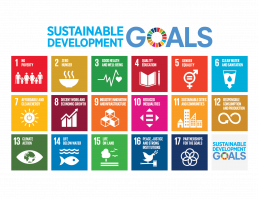
Adopted by over 190 United Nations member states since 2015, SDGs have become the language of development. There are 169 targets and 231 unique indicators that sit underneath the 17 SDGs, helping to bridge goals and actions.
Unlike such frameworks as the UN Principles for Responsible Investment, the SDGs were not drafted for investors. Some of the SDGs seem better suited to alignment in investing than others. For example, decent work and economic growth (SDG 8) and industry, innovation and infrastructure (SDG 9) are probably more relevant to asset managers than zero hunger (SDG 2) and quality education (SDG 4).
Companies are paying increasing attention to SDGs. According to a report (2019) by Bloomberg, “Companies are using SDGs to position themselves on sustainability, with about 60% of the Bloomberg European 500 Index and Japan’s TOPIX 500 — along with about 30% of the S&P 500 — discussing the goals in their reports.”
Spotlight on Listed Equities
While SDGs may seem best suited to impact investing, SDG aligned products have been introduced across many asset classes, including listed equities, where engagement is the key method used to align with the SDGs. Examples include Federated Hermes’ SDG Engagement Equity Fund, RobecoSAM Global SDG Engagement Equities and BMO SDG Engagement Global Equity Fund.
Engagement is key to SDG alignment in equities because listed companies do not prefer to raise fresh capital by issuing shares nor do they intentionally align with the SDGs. There is little, if any, impact that can be attributed to trading shares in the secondary market but engagement with companies to improve their performance related to SDGs is a clear possibility.
The quantum of funds under management increases an asset manager’s influence and a tried and tested engagement process followed by experienced professionals year after year improves its effectiveness.
Engagement is likely to be combined with some degree of exclusionary screening (e.g. tobacco, armaments) and identifying small to medium companies that offer products and services beneficial to society and the environment, such as clean energy, healthcare, or waste management.
The fact sheet (June 2022) for Federated Hermes’ SDG Engagement Equity Fund states that engagement is supported by its dedicated stewardship team, 98% of AUM were engaged and 51% engagements were able to make progress. According to the stewardship team’s plan for 2021-2023, engagement is a four-step process, concern is raised with the company, company acknowledges the concern, company develops strategy, and then implements it.
RobecoSAM reports that its SDG fund invests in companies with economic potential “that are in the middle” regarding sustainability performance because “that’s what offers the most opportunity for improvement” through engagement, thereby “turning caterpillars into butterflies”.
In its Impact Report 2021, BMO says, “We have developed our engagement database to include the underlying 169 SDG targets of the 17 goals, which allows us to log interactions, progress and results to a granular level where relevant.” According to the report, 35% of engagement links to Responsible Consumption and Production (SDG 12) and 27% links to the underlying target pertaining to encouraging companies regarding sustainability practices and reporting. The report adds that during the year, votes were cast against management of companies on 13% of resolutions, “with remuneration the area of most concern”.
The use of engagement as the key method for aligning with SDGs raises an important question: can any asset manager that lays a claim on active ownership also claim SDG alignment for any listed equities fund?
One possible answer to this important question is “Why not?” while another is “Definitely not!”.
The “Why not?” answer is based on the view that if engagement does integrate SDGs, then the fund deserves to claim alignment and may also use the SDG label. Engagement by asset managers ought to follow demands of their clients and if the clients require SDG alignment, then the fund label should say so. A report by OECD, Framework for SDG Aligned Finance (2021), brings home the point that SDG alignment is “just a means of enhancing the likely sustainability impact”. Such labels simply communicate the means (engagement) and the ends (SDGs) and there is nothing wrong with them.
The “Definitely not!” answer represents the alternative view that SDG label runs a real risk of becoming one more box to check and one more buzz word in the marketing materials. In other words, large scale ‘SDG-washing’ would render alignment-through-engagement meaningless. Not everyone is impressed with engagement by the investment industry anyway. Take for example, ShareAction, a charity that promotes responsible investment, which has been critical of the level and quality of engagement by the world’s largest asset managers on key issues such as climate change.
Arguments can be made for both answers. In any case, at present there are very few funds claiming SDG alignment and fewer still that are using the SDG label. Of the list of nearly 4500 funds maintained by the Investment Management Association, there are four with SDG in their name, out of which only two are listed equities funds. The concerns about SDG-washing in listed equities are perhaps outweighed by the need to further explore and develop SDG alignment.
SDG Financial Products was launched at COP26 by GEFI and showcases commercial financial products that are aligned to the SDG in order to share learnings and grow the ecosystem of SDG aligned financial products across asset classes.
The SDG Impact Standards provide guidance on developing an appropriate strategy, management approach, transparency and governance to assist businesses and investors in contributing positively to sustainable development and achieving the SDGs. The Impact Standards also provide a decision-making framework to make sense of existing relevant principles, frameworks and tools.